
The automotive world is undergoing a dramatic transformation in 2025. As vehicles become smarter, more connected, and increasingly autonomous, the interior of a passenger car is no longer just a cabin—it’s evolving into a third living space. After the home and the office, the car is becoming a personalized environment for relaxation, entertainment, productivity, and comfort.
This shift is changing everything inside the vehicle, from seats and ambient lighting to flooring, materials, and overall aesthetics. As mobility redefines itself, interiors are now central to the passenger experience like never before.
The Rise of the “Third Living Space” Concept
With new mobility trends—electric vehicles, autonomous driving systems, seamless connectivity, and quiet cabins—passengers are spending more “quality time” inside their vehicles. Cars are no longer just transportation tools; they are becoming:
- Mobile lounges
- Mini workspaces
- Entertainment rooms
- Relaxation pods
This fundamentally changes how interiors are designed and what materials OEMs and suppliers prioritize.
1. Lounge-Like Comfort Takes Center Stage
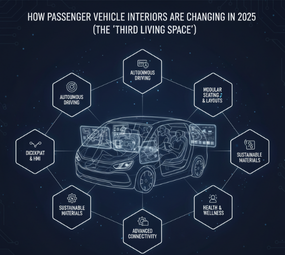
Vehicle interiors in 2025 are shifting toward lounge-inspired layouts. Features include:
- Reclining, sofa-like seats
- Sliding seat rails
- Wraparound ambient lighting
- Minimalist dashboards and hidden interfaces
As drivers become “passengers” in autonomous or semi-autonomous modes, comfort becomes a premium selling point. The interior must feel warm, welcoming, and relaxing—much like a living room on wheels.
2. Premium Materials and Surfaces Are Becoming Standard
Consumers expect interiors that match the refinement of modern homes and luxury spaces. This has led to a demand for:
- Soft-touch surfaces
- Vegan leather
- TPE-based floor liners
- Sustainable composites
- Natural textures and premium finishes
Environmental consciousness and luxury are merging, pushing OEMs to adopt materials that are clean, odor-free, and elegant.
3. Flooring Is Being Completely Reimagined
As interiors become bmore lounge-like, flooring now plays a crucial functional and aesthetic role.
Why Flooring Matters in the “Third Living Space”:
- Passengers are interacting more with the floor (stretching legs, reclining, relaxing).
- Interiors must be visibly cleaner and more hygienic due to compact cabin layouts.
- EVs often have flat floors, which increases the visual impact of flooring.
This has driven the shift from basic rubber mats to engineered materials like TPE floor systems, which offer:
- Premium texture and appearance
- Zero odor
- High durability
- Easy maintenance
- Custom contouring for modern cabin layouts
Flooring is no longer “accessory-level”—it’s a core part of cabin design.
4. Personalization and Modular Interiors
2025 vehicles are embracing modularity. Interiors can now adapt to different activities:
- A workspace mode
- Entertainment mode
- Relaxation/sleep mode
- Family mode
OEMs are introducing configurable layouts and modular components such as removable mats, customizable storage, sliding consoles, and adjustable lighting presets. The flooring must also support modular rearrangements without losing its form or finish.
5. Technology Seamlessly Blending into the Cabin
The cabin is becoming a tech-rich environment that still feels natural and clutter-free. Innovations include:
- Transparent displays
- Hidden touch controls
- Advanced voice assistants
- Panoramic ambient light bars
- Integrated air purification systems
Because the cabin must remain elegant, materials—especially flooring—must hide dirt, resist wear, and maintain a pristine look over time, even with increased cabin activity.
6. Sustainability Is No Longer Optional
2025 consumers expect eco-conscious interiors. This has led to a rise in:
- Recycled plastics and textiles
- Low-VOC materials
- Recyclable TPE flooring
- Plant-based foams and fabrics
- Energy-efficient cabin lighting
The “third living space” mindset prioritizes well-being and environmental responsibility, pushing suppliers to innovate with green materials.
Conclusion: The Vehicle Interior of 2025 Is an Experience, Not a Space
As cars evolve into multi-functional, beautifully designed personal environments, interiors have become a primary battleground for automakers. Flooring, once overlooked, is now essential to creating a hygienic, stylish, and comfortable living-like atmosphere.